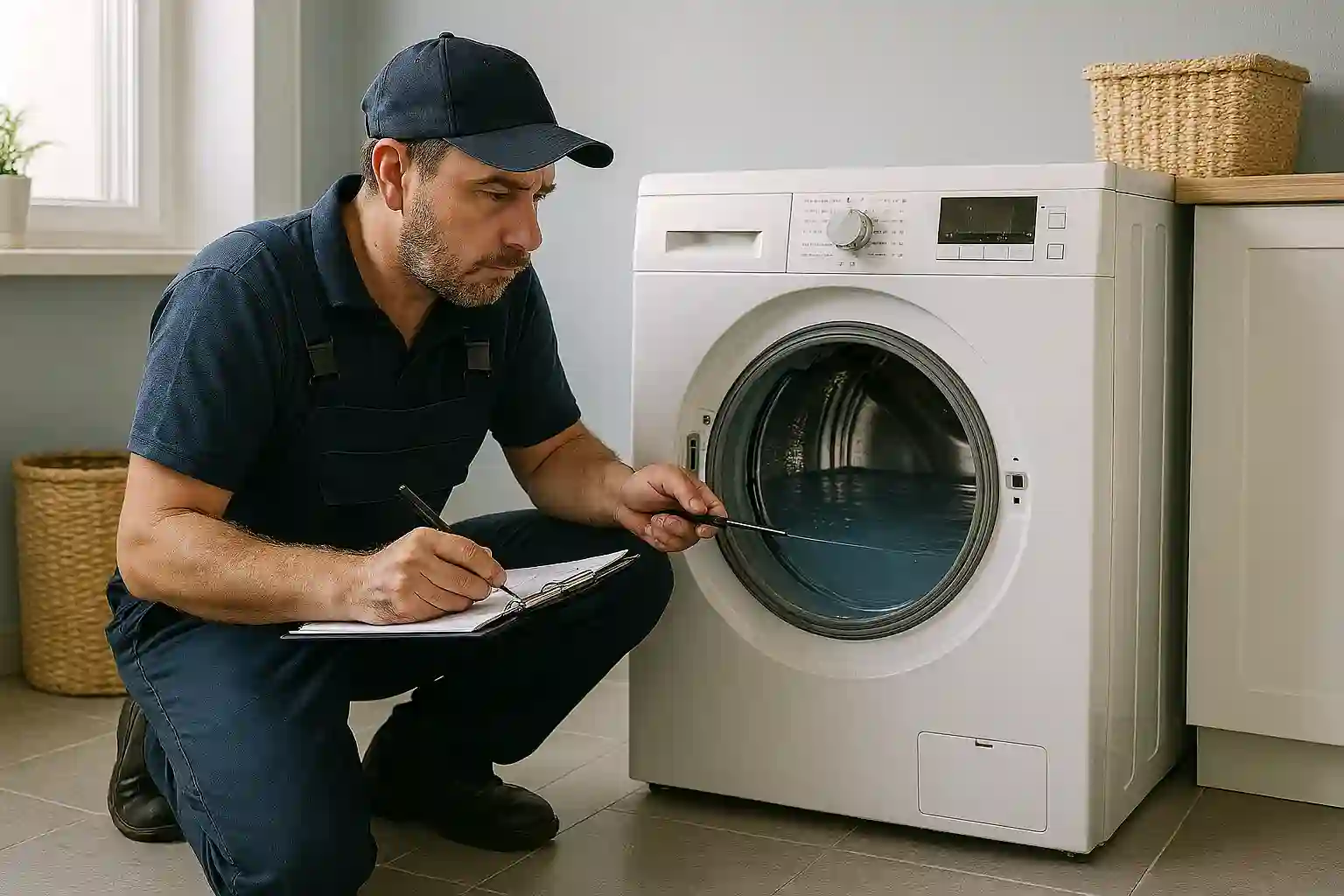

When an appliance breaks down, most homeowners ask the same question: is this worth repairing, or should I replace it now? That decision matters because the wrong move can cost more than it should. Replace too early and you may throw away an appliance with years of useful life left. Leave a failing appliance too long and a small repair can become a larger, more expensive problem. For homeowners in Sydney’s North Shore, AI Appliance Services is already positioned around local appliance repair, with dedicated pages for services, pricing, about, spares parts, and contact, which makes this topic a strong bridge between education and booking.
This decision also matters beyond convenience. Australia generated 511,000 tonnes of e-waste in 2019, and that figure is projected to rise to 657,000 tonnes by 2030. Repairing a viable appliance can reduce unnecessary waste and help households get more value from products they already own.
If you are trying to work out what makes financial sense, this guide will help you assess the appliance’s age, likely fault, replacement value, and whether a local diagnosis is the smartest next step.
In many cases, repair is the better first option when the fault is isolated
If the appliance is still in generally good condition and the fault appears limited to one area, repair is often the better first step. CHOICE notes that repairs can make financial sense until an appliance gets close to the end of its working life, especially when the issue is limited rather than system-wide.
Based on the service-page copy you provided, AI Appliance Services already focuses on repairing faults that often fit this category, such as:
- washing machine leaks, drainage problems, and spin faults
- dryer long drying times, overheating, and drum faults
- oven element, door seal, and thermostat issues
- dishwasher leaks, drainage faults, and poor cleaning results
- cooktop ignition and heating zone issues
- induction pan detection errors, error codes, and power board faults
- range hood motor, lighting, and suction faults
- steamer descaling, seal leaks, and electronic faults
- Miele vacuum motor faults, blockages, and cord retractor issues
These are exactly the kinds of problems that often justify a professional diagnosis before you decide to replace anything.
Laundry appliances are often worth assessing before replacing
Washing machines and dryers are heavily used, but that does not automatically mean a fault justifies replacement. CHOICE’s guidance on appliance lifespan and repair value suggests that age and repair cost should be weighed together rather than using age alone as the deciding factor.
If your washing machine is leaking, not draining, or not spinning, or your dryer is taking too long to dry or overheating, a targeted repair may still be the most practical choice based on the specific fault and the overall condition of the appliance.
Kitchen appliances can often justify repair when the failure is specific
Dishwashers, ovens, cooktops, induction surfaces and range hoods often fail in ways that are frustrating but still repairable. For example, an oven that no longer heats evenly or a dishwasher that is not cleaning properly may only need one component repaired rather than full replacement. [to be verified by technician]
This is especially relevant if the appliance is built in, premium, or difficult to match aesthetically with the rest of the kitchen.
Replacement is usually the better option when value and reliability have dropped too far
There are times when replacement is the smarter choice. CHOICE warns that when an appliance is close to the end of its working life, a repair may cost more than the appliance is worth, or another component may fail soon after the original repair.
The ACCC also notes that there are no fixed rules for exactly how long a product should last. Instead, reasonable durability depends on the product’s nature, price, statements made about it, and other circumstances.
Consider replacement when:
- the appliance has had repeated breakdowns in a short period
- multiple unrelated faults are appearing at once
- the repair quote approaches the value of replacing the appliance
- spare parts are no longer reasonably available
- the appliance is inefficient, underperforming, and no longer fits the household’s needs
NSW consumer guidance also states that products should have spare parts and repair facilities available for a reasonable time after purchase unless the customer was told otherwise.
Replacing may also make sense when performance has fallen below expectations
Even if a repair is technically possible, replacement may be the better long-term investment if the appliance is noisy, unreliable, inefficient, or causing repeated disruptions.
The simplest way to decide is to use the age, fault and cost test
If you want a practical framework, use these three factors together:
- Age of the appliance
- Type of fault
- Repair cost versus replacement cost
This is a much better approach than deciding based on one factor alone.
1. Start with age, but do not stop there
Australian consumer guidance suggests that appliance lifespan varies by type, usage and maintenance. CHOICE’s analysis explains that products such as washing machines, dishwashers and fridges have different reasonable lifespan expectations, and Canstar Blue also provides general ownership-life estimates across household appliances.
That means a seven-year-old dishwasher and a seven-year-old oven should not automatically be judged the same way.
2. Assess whether the fault is isolated or widespread
A failed element, drainage issue, or single motor-related problem may be very different from repeated performance failures across multiple systems.
As a rule of thumb:
- isolated fault often supports repair
- multiple faults often pushes the decision towards replacement
3. Compare the repair quote to the appliance’s remaining value
This is the step many homeowners skip. A service call that leads to a clear diagnosis helps you compare the actual repair cost with the cost of:
- replacing the appliance
- removing and installing a new unit
- losing time waiting for delivery
- replacing a built-in or visually matched product
A professional diagnosis lets you judge the full cost, not just the sticker price of a replacement.
Your consumer rights may affect whether repair or replacement is the right move
Many homeowners assume that once the manufacturer warranty has ended, all responsibility ends too. That is not necessarily true. The ACCC states that consumer guarantees apply automatically under Australian Consumer Law and cannot be removed by store policy or warranty wording.
NSW guidance also explains that when a product does not meet consumer guarantees, the customer may be entitled to a repair, replacement, or refund, depending on whether the problem is major or minor.
What this means in practice
- “Out of warranty” does not always mean “out of rights”.
- Products are expected to be durable for a reasonable time, even though there is no single fixed lifespan for every item.
- If the appliance failed unusually early, it may be worth checking your rights before paying for a replacement.
Keep your paperwork
If you still have proof of purchase, prior repairs, or warranty records, keep them handy. NSW guidance notes that a business has the right to assess the product before a remedy is provided.
A local diagnosis is often the cheapest way to avoid a bad decision
The biggest mistake many homeowners make is replacing an appliance before they know what has actually failed. A local inspection gives you clarity on whether the problem is limited, whether parts are available, and whether the repair is likely to hold up.
AI Appliance Services already has dedicated website pages for services, pricing, about and contact, which means this article can guide readers directly towards the next step rather than leaving them uncertain about where to go next.
Based on the service-page copy you provided, this is also where your conversion points can do real work:
- fast fault diagnosis
- genuine spare parts
- all major brands covered
- local review ratings
- service call $165
Questions to ask before deciding
Before you repair or replace, ask:
- What has actually failed?
- Is this a one-part issue or a sign of wider wear?
- Are parts available?
- Is the appliance likely to remain reliable after the repair?
- How does the total repair cost compare with buying and installing a replacement?
Why this matters in Sydney North Shore homes
For local homeowners, replacing a built-in kitchen appliance or organising a fast replacement can be inconvenient and expensive. A prompt diagnosis can often cut through guesswork and help you make the right choice sooner.
Appliance-by-appliance guide: what is often worth repairing first
This section is useful for readers scanning for their exact appliance type.
Washing machine
If the machine is leaking, not draining, or failing to spin, those are the kinds of faults already covered by your washing machine repair service. A diagnosis is usually worthwhile before replacing the unit.
Dryer
If the dryer takes too long to dry, overheats, or has a drum fault, there may still be good value in repair, especially if the rest of the machine is in solid condition.
Oven
Failed elements, thermostat issues and worn door seals can affect temperature consistency without meaning the whole appliance is finished.
Dishwasher
Leaks, drainage problems and poor cleaning results are all repair-worthy issues to assess before replacing a dishwasher.
Cooktop and induction
Ignition faults, heating zone issues, pan detection errors and power board faults often justify specialist technical diagnosis rather than immediate replacement.
Range hood, steamer and Miele vacuum
These are specialist appliances where matching function, performance and fit can matter. That often makes a professional repair assessment more valuable before replacing.
Key takeaways
- Use the age, fault and cost test instead of deciding emotionally.
- Repair is often worth considering when the fault is isolated and the appliance is otherwise performing well.
- Replacement becomes more attractive when breakdowns are frequent, parts are unavailable, or the appliance has little remaining value.
- Consumer guarantees may still apply even after the manufacturer warranty ends.
- Repairing a viable appliance can reduce waste and help households avoid unnecessary replacement.
- A local diagnosis is often the most cost-effective step before replacing a washing machine, dishwasher, dryer, oven, cooktop, induction surface, range hood, steamer or Miele vacuum.
FAQ
Conclusion
A broken appliance does not automatically mean you need a new one. In many cases, the smarter move is to pause, get a proper diagnosis, compare repair and replacement costs properly, and decide based on value, reliability and convenience rather than frustration. That is especially true when you are dealing with premium, built-in or specialist appliances where replacement can be more disruptive than expected. CHOICE, the ACCC and NSW consumer guidance all support the idea that durability, repair value and remedies should be judged in context, not with a one-size-fits-all rule.